Recycling and Sustainability for Landscaping Erith
 Landscaping Erith is increasingly shaped by a practical commitment to recycling, resource efficiency, and lower-impact site operations. In a part of South East London where borough-led waste separation is becoming more familiar across homes, streets, and building projects, sustainable landscape work needs to support the same direction of travel. Our approach to landscaping in Erith focuses on reducing landfill use, sorting material responsibly, and making sure that reusable green waste, soil, timber, and inert rubble are handled with care. A key target is to recycle or recover at least 85% of collected landscape waste, helping ensure that the largest possible share of material is diverted into beneficial reuse, composting, or specialist processing.
That target is supported by a straightforward on-site separation process. Green waste such as grass cuttings, hedge trimmings, leaves, and plant matter is kept separate from timber, plastics, packaging, and mixed rubble so that each stream can be sent to the most suitable facility. In practical terms, this mirrors the boroughs’ wider emphasis on waste sorting at source, where better segregation improves recycling outcomes and reduces contamination. For Erith landscaping projects, this means cleaner material streams, less unnecessary disposal, and better use of local recycling routes.
 The recycling process also includes careful management of soil and aggregates. Surplus topsoil is assessed for reuse before anything is sent away, and inert materials such as broken paving, concrete fragments, and stone are directed toward recovery rather than general waste. This is particularly relevant to landscaping services in Erith, where redevelopment, boundary improvements, and garden redesigns often generate mixed materials that can be separated efficiently when handled early. By keeping recyclable material distinct from contamination, we improve the chance that it can be processed into new construction inputs or reused in landscaping applications.
Another important part of our sustainability model is using local transfer stations and processing facilities to reduce haulage distance and improve the efficiency of waste movement. When possible, material from Erith landscaping projects is routed through transfer stations serving the wider Bexley and Thames-side area, helping consolidate loads before they enter specialist recycling or recovery systems. This supports lower emissions, fewer vehicle movements, and more organised handling of garden waste, soil, wood, and light construction remnants. It also means that waste is managed closer to the point of origin, which aligns with the borough’s broader efforts to keep recyclable streams separate and traceable.
We also recognise the value of partnerships with charities and community reuse groups. Suitable items such as surplus planters, reclaimed timber, decorative stone, and lightly used garden features may be passed on where they can be repurposed. These relationships help extend the life of materials that would otherwise be discarded, while supporting local initiatives that benefit residents, gardens, and community spaces. In the context of Erith garden and landscape recycling, this is a simple but meaningful way to reduce waste and encourage circular use of resources.
 Charitable partnerships can also include the donation of plant containers, hand tools, and recoverable hardscape elements when they remain safe and fit for reuse. Rather than sending every item to disposal, we aim to identify practical second-life options before choosing a waste route. This approach complements local recycling expectations in borough areas where waste separation, shared responsibility, and better sorting are increasingly common themes. For Landscaping Erith, sustainability is not only about recycling what cannot be reused; it is also about preserving value in the materials already on site.
Vehicle choice is another area where emissions can be reduced without compromising service quality. Our fleet includes low-carbon vans designed to cut fuel use and lower the environmental impact of site visits, waste collections, and material deliveries. These vehicles are used for a range of tasks across the area, including transporting green waste to local transfer stations and bringing in recycled materials for new landscape installations. For clients seeking sustainable landscaping in Erith, low-carbon transport is a practical step toward reducing the overall footprint of each project.
The benefits of lower-emission vans are especially relevant in urban and suburban settings where short journeys, repeated loading, and stop-start traffic can add up quickly. By planning routes efficiently and matching vehicle size to the task, we can reduce unnecessary mileage and limit fuel consumption. Combined with sorted waste streams and local processing points, this creates a cleaner and more responsible system for Erith landscaping projects from start to finish.
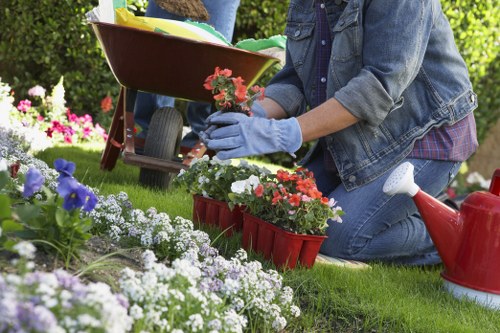 We also look for opportunities to reuse materials within the project itself. Bricks, paving pieces, gravel, and certain planting materials may be incorporated into new layouts where suitable, reducing the need for fresh extraction and transportation. This type of reuse is especially valuable in boroughs where recycling schemes already encourage households and businesses to separate different waste types, because it reinforces the same mindset on-site. Through careful planning, Landscaping Erith can support better material efficiency, less waste, and more thoughtful use of local resources.
The environmental approach extends to everyday operational habits as well. We minimise unnecessary packaging, separate recyclables during loading, and work to avoid contamination that can downgrade a recycling load. Metal offcuts, untreated wood, cardboard, and clean plastics are set aside where possible so they can enter the correct recovery route. This is particularly helpful on projects that produce a mixture of organic and non-organic waste, such as garden redesigns, boundary works, or the removal of old planting schemes. By keeping sorting simple and consistent, landscaping services in Erith can achieve higher recycling performance with fewer complications.
Our sustainability targets are reviewed regularly so that progress can be tracked and improved. The current aim remains to recycle or recover at least 85% of all collected landscape waste, with a focus on increasing reuse wherever practical. As local boroughs continue to refine their approach to waste separation and resource recovery, the landscaping sector has an opportunity to lead by example. That means choosing local transfer stations, supporting charity partnerships, and using low-carbon vans not as optional extras, but as standard parts of responsible work.
 For clients choosing Landscaping Erith, this means more than a neat finished garden or outdoor space. It means a project delivered with a clear sustainability mindset: recyclable materials handled properly, reusable items redirected to charity where possible, emissions reduced through smarter transport, and waste kept in line with local recycling best practice. By combining practical site management with modern environmental standards, we help make landscape improvement part of a wider, greener local future.